

How to Fit a Travel Plug Correctly
Home / Insights by Coloured Bottles /
Packing & Fulfilment Guide
A simple push-fit insert can be the difference between a bottle that arrives intact and one that leaks in transit. Here's how to fit one properly — by hand or at volume.
By Coloured Bottles · July 2026 · 5 min read
If you're shipping essential oils, tinctures, serums or other liquid products, a travel plug is one of the simplest ways to help prevent leaks during storage and transport. Although fitting a travel plug is straightforward, using the correct technique will give you a more consistent seal, reduce operator fatigue and minimise the risk of damaging the bottle.
The Basics
What is a travel plug?
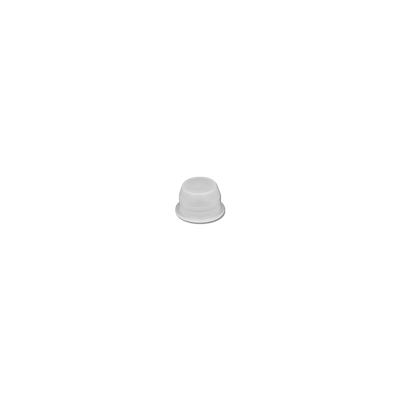
A travel plug is a push-fit insert that sits inside the neck of a bottle. It creates a temporary liquid-tight seal, making it ideal for transporting filled bottles before a dropper, pipette or pourer is fitted and the final closure is applied.
Travel plugs are commonly used for:
Preparation
Before you start
- Fill the bottle to the required level.
- Wipe away any excess liquid from the bottle neck and rim.
- Check that the travel plug is clean and free from damage.
- Ensure you're using the correct size travel plug for your bottle finish.
Why it matters
A clean, dry bottle neck helps the plug seat correctly — moisture or residue is one of the most common causes of an uneven seal.
Method
Manual insertion — best practice
For small production runs, travel plugs can be inserted by hand. We recommend the following method:
Place the travel plug squarely into the bottle opening.
Press gently until the plug starts to engage with the neck.
Apply firm, even pressure directly downwards.
Continue pressing until the plug is fully seated.
Avoid pressing at an angle, as this can cause the plug to tilt or seat unevenly.
Scaling Up
Making manual insertion easier
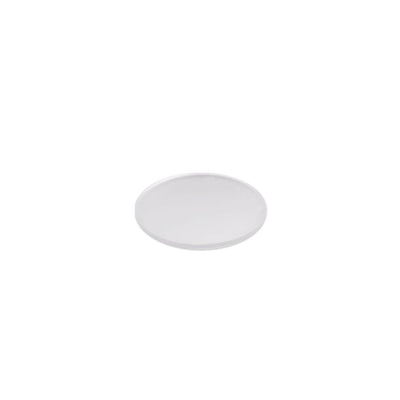
If you're inserting large numbers of travel plugs, repeatedly using your thumbs can become uncomfortable. A simple way to improve consistency is to use a flat nylon or acetal (Delrin®) pressing puck — a smooth plastic disc that sits between your hand (or a press) and the travel plug.
Because nylon and acetal are durable engineering plastics, they won't mark the plug during insertion.
Production Scale
Using an arbor press
If you're regularly assembling hundreds of bottles, a small bench-mounted arbor press can significantly improve efficiency. Using a flat nylon pressing puck with an arbor press allows you to:
- Keep the bottle upright.
- Apply straight, controlled pressure.
- Insert each plug to a consistent depth.
- Reduce operator fatigue.
- Increase production speed.
For even better results, a custom-machined nylon puck with a shallow recess can help keep the travel plug perfectly centred during insertion.
Troubleshooting
Common mistakes to avoid
Troubleshooting
Dealing with a tight fit
Because a travel plug relies on friction to create its seal, some resistance during insertion is normal and expected — it's what keeps the plug securely in place during transit. That said, if a plug feels excessively tight or needs considerable force to fit, a few adjustments can make the process much easier without compromising the seal.
Double-check the size. Even a fraction of a millimetre of difference between the plug and the bottle's neck finish can turn a firm push into a real struggle. Confirm you're using the plug specified for your exact neck finish before assuming the fit is simply tight.
Let the plug reach room temperature. Plastic stiffens in cold storage, which can make an otherwise correctly sized plug feel tighter than usual. Leaving plugs at room temperature for a few hours before use restores their natural flexibility.
Check the neck is completely dry. Any residue, condensation or fragrance oil around the rim increases friction rather than reducing it, so a dry neck is easier to seal than a "lubricated" one.
Use a pressing puck or arbor press. Concentrated pressure from a fingertip or thumb is far harder to sustain evenly than pressure spread across a flat puck, particularly on a tight-fitting plug. A press also removes the guesswork of judging how much force is safe to apply by hand.
Insert in one continuous motion. Stopping and restarting partway through allows the plug to bind against the neck. A single, steady push straight down is more effective than repeated short pushes.
Consider a liner alternative. If travel plugs consistently feel too tight for a particular bottle run, our EPE foam liner offers a softer, more forgiving fit while still providing reliable leak protection in transit.
Final Check
Checking the seal
Once fitted:
- The plug should sit level within the bottle neck.
- There should be no visible gaps around the edge.
- The plug should not rock or move when lightly pressed.
- Fit the cap or closure and check that it screws on normally.
If you're preparing products for shipping, it's good practice to carry out a leak test on a sample of finished bottles before dispatch.
Shop travel plugs and liner alternatives
Choosing the correct travel plug and fitting method can make a significant difference to product presentation and transport performance.
Laissez un commentaire