

What Glass Can You Use for Candles?
Key Takeaways
- Not every glass jar is safe for a candle. Use glass that's made and sold for candle making, with thick, even walls and no chips or cracks.
- Shape matters. Straight-sided or gently tapered glass with a wide opening burns more evenly than narrow necks or curved bowls.
- The diameter of the glass decides the wick, and the size decides the burn time and the price point.
- Clear, sprayed and coloured finishes change the look of the candle, not the basic rules. Always test-burn every new glass and wick combination.
- Browse our candle glass and lids, or get in touch and we'll help you choose.
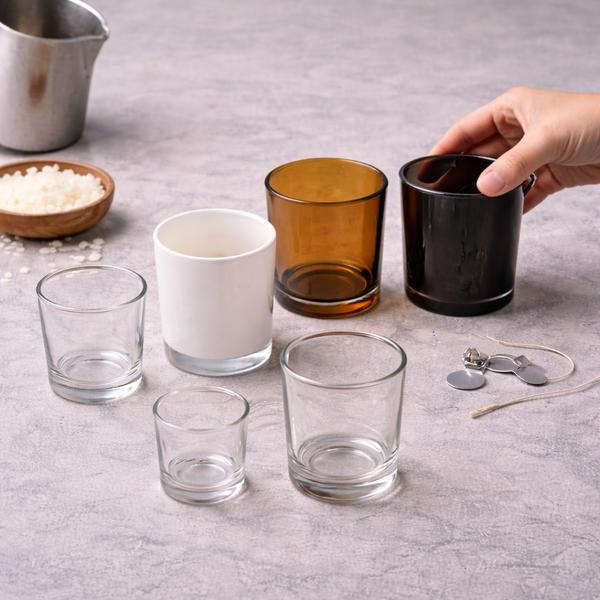
Candle glass comes in lots of sizes and finishes. The rules for choosing it stay the same.
Why Can't You Use Any Glass Jar for a Candle?
It's tempting. You've got a nice jar from the kitchen cupboard, or a pretty tumbler from a homeware shop, and it looks just right for a candle.
But a candle is a small fire in a container.
As it burns, the wax pool gets hot, and so does the glass around it. The bottom and sides warm up unevenly, and that puts the glass under stress. Glass made for food storage or decoration isn't necessarily designed to cope with that, especially if it's thin, has uneven walls or already has a tiny chip.
Most of the time nothing happens. That's not the same as safe.
Candle glass is chosen and sold specifically for this job. That's why it's the starting point for anyone making candles to sell, and the sensible choice for anyone making them at home too.

Featured product
30cl Clear Karen / Lucy Candle Glass
Suits makers wanting a popular all-round container.
View productWhat Makes Glass Suitable for a Candle?
A few things separate good candle glass from glass that just looks the part.
Thick, even walls. Glass that's a consistent thickness all the way round heats more evenly. Thin spots are where stress builds up.
A solid base. The base sits closest to the end of the burn, when the wax pool is at its shallowest. A heavier base gives the flame more distance from the surface underneath and helps the candle sit steadily.
No damage. Chips, cracks and deep scratches weaken glass. Check every piece before you fill it, and set aside anything that isn't perfect.
Made for candles. Buy glass that's sold as candle glass, from a supplier who can tell you what it's intended for. If you're not sure, ask.
None of this is complicated. It just needs checking before you pour, not after.
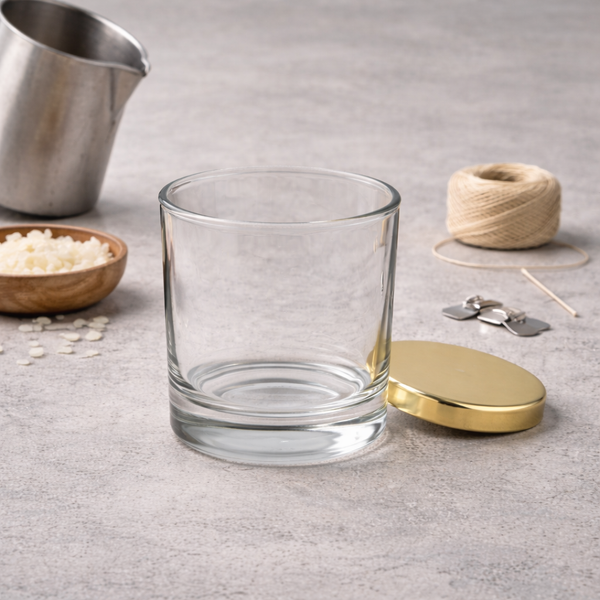
Straight sides and a wide opening make for an even, steady burn.
What Shape of Candle Glass Burns Best?
Simple shapes usually burn best.
Straight-sided or gently tapered glass lets the wax pool spread evenly to the edges. That gives you a full melt pool, a cleaner burn and less wax left clinging to the sides.
Narrow necks are the problem shape. Heat collects under the shoulder, the flame has less air, and the wax around the edge often never melts properly. That's how you end up with tunnelling, where the candle burns a hole down the middle and wastes the wax around it.
Wide, shallow bowls can work well, but they usually need more than one wick to melt evenly across the whole surface.
If you're starting out, choose a classic tumbler shape. There's a reason it's the most popular candle glass in the UK.
Our article on why the Karen and Lucy 30cl candle glass remains so popular goes into more detail.

Featured product
9cl Clear Meredith Candle Glass
Suits small candles, samples and gift sets.
View productWhat Size Candle Glass Should You Choose?
Size decides three things: how long the candle burns, what you can charge for it and which wick you'll need.
Candle glass is usually sold by capacity in centilitres. As a rough guide:
- Small (around 5cl to 10cl) suits votives, samples, favours and gift sets.
- Medium (around 20cl to 30cl) is the classic single-wick candle and the most common retail size.
- Large (50cl and up) suits statement candles, which often need two or three wicks.
The measurement that matters most for the burn is the diameter of the opening, not the volume. A wider candle needs a bigger wick, or more than one, to melt the wax right to the edge.
That's why wick suppliers size their wicks by diameter. Measure your glass, then check the wick maker's guidance for your wax.

Featured product
Large Candle Glass 1kg – Clear Glass Tub for 3 Wick Candles
Suits large statement candles.
View productFor a big three-wick candle, a heavy tub like our 1kg large clear candle glass gives you plenty of room.

Featured product
30cl Gloss Black Internally Sprayed Karen / Lucy Candle Glass
Suits makers wanting a darker, premium look.
View productClear, Coloured or Sprayed: Which Finish Should You Pick?
This one is mostly about your brand.
Clear glass shows the wax, the colour and the wick. It looks clean and natural. The downside is that it also shows everything else, including wet spots where the wax has pulled away from the glass and any frosting on the wax surface.
That's normal, especially with natural waxes. But some customers notice it.
Sprayed and coloured glass hides those marks and gives you a bolder look on the shelf. Black, white, grey and amber are all popular for home fragrance brands that want a premium, consistent finish.
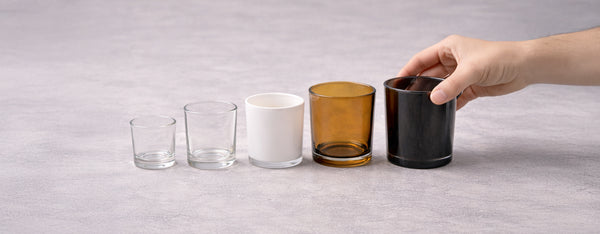
From small clear votives to white, amber and black sprayed glass.
Internally or externally sprayed?
Internally sprayed glass is coated on the inside, so you see the colour through the glass. That gives a deep, glossy look.
Externally sprayed glass is coated on the outside. It's how you get soft-touch matt finishes in black, white or grey.
Both work. Choose the one that suits your labels and your brand, then test-burn it with your wax and fragrance just as you would clear glass.
You'll find our full range of finishes in sprayed glass for candles, diffusers and cosmetics.
Do Candle Glasses Need Lids?
They don't need them. But most good candles have one.
A lid keeps dust off the wax between burns, helps hold the scent in and makes the candle look finished as a gift. Wooden, gold, silver and copper lids are all popular, and many come with a seal that helps them sit snugly.
Lids are made for particular glass shapes and sizes, so choose them together. The simplest way on our site is the Add Compatible Item section on each candle glass product page, which shows the lids that go with that glass. You can also browse our candle lids.
One rule always applies: take the lid off before you light the candle, and only put it back once the flame is out and the glass has cooled.
How Do You Test a New Candle Glass?
Every new combination of glass, wax, fragrance and wick needs testing. Even if you've used the same glass before.
Here's a simple routine:
- Pour a few test candles with your real wax, fragrance load and wick.
- Let them cure for as long as your wax supplier recommends.
- Burn them in a draught-free spot, on a heat-resistant surface, and never leave them unattended.
- Check the melt pool reaches the edge in a reasonable time, the flame stays steady and the glass doesn't get excessively hot.
- Burn right down to the end. The last part of the burn is when the glass gets hottest, so it's the part that matters most.
If the flame is too big, the wick is probably too large. If the candle tunnels, it's probably too small. Change one thing at a time and test again.
If you're selling your candles, check the safety warnings and labelling rules that apply to scented candles in the UK as well. Our guide on how to start a candle business in the UK is a good place to begin.
What Are the Most Common Mistakes?
We see the same few again and again.
- Using decorative glass. If it wasn't sold for candles, don't assume it's suitable.
- Choosing the wick before the glass. The glass diameter decides the wick, not the other way round.
- Skipping the full test burn. A candle that behaves for the first hour can still misbehave near the bottom.
- Filling too close to the rim. Leave a little space at the top so the flame sits inside the glass.
- Mixing suppliers for glass and lids. A lid that nearly fits looks wrong and won't stay put.
For more on sizes, shapes and finishes, have a look at our Candle Glass Guide.
The Bottom Line
The best glass for candles is glass that's made for candles.
Look for thick, even walls, a solid base and a simple, open shape. Choose the size for your burn time and price, the diameter for your wick and the finish for your brand. Then test every combination all the way to the bottom before you sell it.
It's simple. It just needs doing properly.
Browse our Candle Glass collection, or contact us and tell us what you're making. We'll help you find the right glass.
FAQs
Can you use any glass jar for a candle?
It's not a good idea. Glass made for food or decoration may not cope with the heat of a burning candle. Use glass that's made and sold for candle making.
What is the best glass for candles?
Thick, evenly made candle glass with a solid base and a straight or gently tapered shape. A 30cl tumbler is the most popular choice for a single-wick candle.
How do I choose the right wick for my candle glass?
Measure the diameter of the glass, then use your wick supplier's sizing guide for your wax. Test-burn and adjust if the flame is too big or the candle tunnels.
Is sprayed candle glass safe to use?
Sprayed candle glass is made for candle making. As with any glass, test-burn it with your own wax, fragrance and wick before you sell.
Why do candles get wet spots on the glass?
Wet spots are patches where the wax has pulled away from the glass as it cools. They're common, especially with natural waxes, and don't affect the burn. Sprayed or coloured glass hides them.
Do I need a lid for my candle?
Not to burn it, but a lid keeps dust out, helps hold the scent and makes a better gift. Use the Add Compatible Item section on the glass's product page to find one that goes with it.
Leave a comment