

How Do You Choose the Right Spice Jars?
Key Takeaways
- Spices lose flavour through light, heat, moisture and air. A good spice jar keeps all four out.
- Glass is a strong choice because it doesn't absorb smells or colour, so a jar that held smoked paprika won't taint the next fill.
- A jar of around 100ml suits most retail spices, but weight varies a lot from spice to spice. Always do a test fill before you print labels.
- The lid matters as much as the jar. It has to match the jar's neck and seal well, so use the Add Compatible Item section on each product page to find lids that fit.
- Browse our food jars, or get in touch and we'll help you choose the right spice jar for your range.

Dried herbs and spices keep best in a well-sealed glass jar.
How Do You Choose the Right Spice Jars?
Open a fresh jar of cumin and you know about it straight away.
Open one that's sat by the hob for two years and you get dust.
Same spice. Different storage.
If you sell spice blends, rubs, seasonings or dried herbs, the jar is doing a real job. It protects the flavour your customer is paying for, and it's the first thing they see on the shelf.
So it's worth choosing carefully. The right spice jar comes down to five things: the material, the size, the colour of the glass, the lid and the label. Get those right and the rest is easy.
Why Is Glass a Good Choice for Spices?
Because glass doesn't hold on to anything.
Spices are strong. Their flavour comes from natural oils, and those oils cling to some materials. A plastic tub that held curry powder tends to smell of curry powder for a long time.
Glass doesn't do that. It's non-porous, so it won't absorb smells, flavours or colour. Wash it and it's clean.
There are other reasons too.
- It shows the product. Turmeric, paprika, pink peppercorns and dried chilli all look good through glass. Colour sells spices.
- It feels like quality. A glass jar has weight. That suits a small-batch blend sold at a premium.
- It can be reused and recycled. Customers refill glass spice jars for years, and glass is widely recycled when they've finished with it.

Featured product
A small, wide-necked round jar that suits retail spices, rubs and seasoning blends.
View productWhat Size Spice Jar Do You Need?
Most kitchen spice jars are small. Somewhere around 100ml is typical.
That's deliberate. Spices are used a pinch at a time, and a small jar gets finished while the contents are still fresh.
But here's the catch. Jars are sold by volume, in millilitres. Spices are sold by weight, in grams. And the two don't match.
A jar that holds a good weight of ground cinnamon will hold far less dried oregano. Leafy herbs are light and bulky. Seeds and ground spices are denser.
That's normal.
It just means you can't choose from the ml figure alone. Fill a sample jar with each product, leave a little headspace, and weigh it. Then you'll know what to print on the label.
As a rough guide:
- Small (30ml to 60ml). Saffron, vanilla, expensive spices, sample sizes and gift sets.
- Medium (around 100ml to 120ml). The standard retail size for most ground spices, blends and rubs.
- Large (250ml and up). Refill sizes, bulky dried herbs, catering and keen home cooks.
Our size guide explains ml, cl and oz in plain terms, and our guide to small glass jars covers the smaller sizes in more detail.
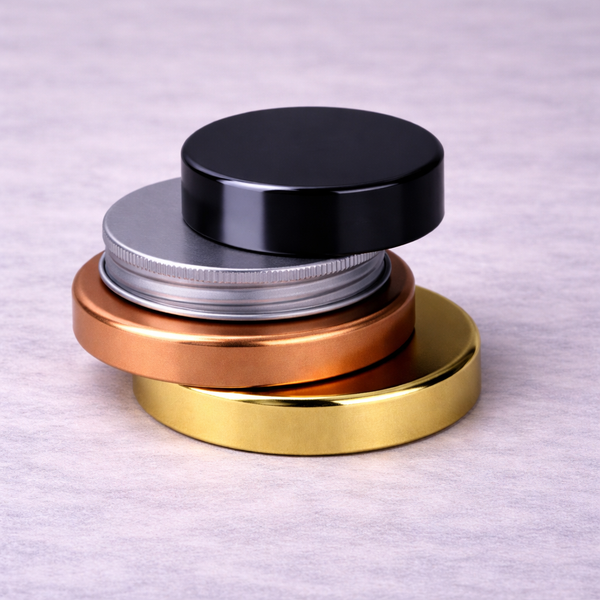
The lid seals the jar and sets the look.
Which Lids Work Best for Spice Jars?
The one that seals properly.
Air and moisture are what turn a lively spice flat. Steam from a pan is enough to make ground spices clump. So the lid needs to close firmly every time, not just the first time.
Most glass spice jars take a screw cap or a twist-off metal lid. Both work well when they match the jar.
And that's the important part. Lids come in different diameters and thread types, and the lid has to match the jar's neck. A lid that nearly fits won't seal. It might loosen in the post or let damp in on the shelf.
So don't guess.
On our site, open the jar's product page and look for the Add Compatible Item section. It shows the closures that fit that jar, so you can add the right ones to the same order.
You can browse our food closures, or read the Closures & Components Guide for more on closure types.

Featured product
Amber glass cuts down the light reaching ground spices, powders and dried herbs.
View productDoes the Colour of the Glass Matter for Spices?
It can. Light is one of the things that fades spices.
You've probably seen it. Paprika that's gone from bright red to dull brown. Dried parsley that's turned pale. That's light at work, and flavour goes with the colour.
So you've got a choice to make.
- Clear glass shows off the product. It's the best choice when colour is your selling point and the jar will live in a cupboard or drawer.
- Amber glass filters out much of the light that causes fading. It suits spices that sit out on a rack or a shop shelf.
- Miron violet glass is a dark violet glass made to protect light-sensitive contents. It suits premium dried herbs, teas and botanicals.
If your spices will sit under shop lights for weeks, darker glass is worth a look. Our guide to amber vs clear glass goes through the differences.
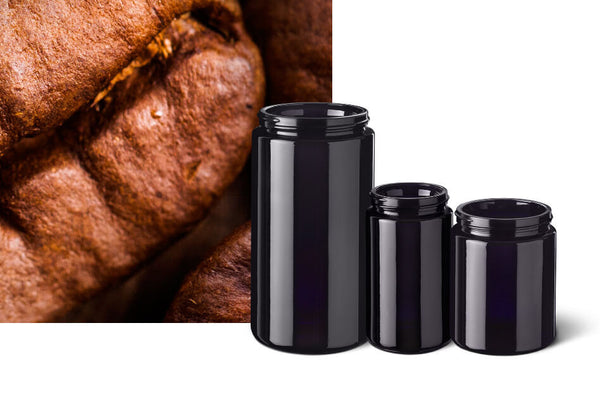
Miron violet glass wide neck jars for light-sensitive dry goods.
When Is Violet Glass Worth It for Herbs and Spices?
When the product inside is delicate, valuable or both.
Think saffron, vanilla, dried flowers, loose-leaf tea and carefully grown culinary herbs. These are products where freshness is the whole point, and where a customer will happily pay for packaging that looks after it.
Miron violet glass looks almost black on the shelf. That gives a range a very different feel from a row of clear jars. It reads as apothecary, careful and premium.
It isn't the right choice for every spice. If you sell a bright everyday blend at a keen price, clear glass will show it off better.
You can see the range in our Miron wide neck jars, and our post on protecting herbs with the right storage jar has more on why light matters.
How Do You Label a Spice Jar?
Carefully. Spice jars are small, and the label has a lot to do.
It needs to carry your brand and the product name. It also needs room for the details the law asks for on packaged food, such as the ingredients, the weight and a best-before date.
Allergens matter here. Mustard, celery and sesame are all common in seasonings, and all three are on the list of allergens that have to be made clear on the label. Check the labelling rules that apply to your product before you print.
A few practical tips:
- Measure a sample jar first. The straight part of a small jar is shorter than it looks.
- Leave some glass showing. Customers want to see the spice. A label that wraps the whole jar hides your best asset.
- Use the lid. A round sticker on top helps customers who keep their spices in a drawer.

Featured product
110ml Clear Glass Hexagonal Jar
Six flat sides give a spice gift set a hand-made look and a neat panel for the label.
View productCan You Build a Spice Range or Gift Set Around One Jar?
You can. And it's one of the easiest ways to make a small brand look established.
Pick one jar and one lid colour, then use them across the whole range.
Same jar. Same lid. Same label style.
Line up eight blends like that and it looks like a collection, not a jumble. It also makes life simpler. You hold one jar and one lid in stock, and reordering is quick.
Gift sets follow naturally. Three or four small jars in a box make a ready-made present, and spice sets sell well in the run-up to Christmas. A shaped jar helps here. Our guide to hexagonal jars explains what that shape does well.

60ml Clear Glass Powder Jar: a smaller size for costly spices and samples.
The Bottom Line
A spice jar has one job above all. Keep the flavour in.
That means keeping light, heat, moisture and air out. Glass gives you a clean, non-porous start. The right lid does the sealing. And the colour of the glass decides how much light gets through.
Choose the size by weight, not just by ml, and test it with your real product. Plan the label around a small jar. Then use the same jar across your range so it looks like a family.
Lids must match the jar, so use the Add Compatible Item section on each jar's product page to see the closures that fit. You can also browse our glass jars, read our Closures & Components Guide, or contact us and tell us what you're making.
FAQs
What size is a standard spice jar?
Most kitchen spice jars are around 100ml. The weight they hold varies a lot between spices, so do a test fill with your own product before you decide.
Are glass jars better than plastic for spices?
Glass doesn't absorb smells, flavours or colour, so it stays clean fill after fill. It also looks and feels more premium. Plastic is lighter and won't break, so it comes down to your product and your customer.
Should spice jars be clear or dark glass?
Clear glass shows off colour and suits jars kept in a cupboard. Amber or violet glass reduces the light reaching the contents, which helps when jars sit out on a rack or under shop lights.
Do your spice jars come with lids?
On our site, jars and lids are listed separately so you can choose the closure you want. Use the Add Compatible Item section on the jar's product page to add lids that fit.
Can I buy spice jars in bulk?
Yes. You can order a small quantity to test, then buy in volume once you're happy. See our wholesale buying guide for more on ordering in bulk.
Dejar un comentario