

How Do You Choose the Right Jam Jar?
Key Takeaways
- The right jam jar depends on your recipe, your filling method and how you sell. There's no single "standard" jar.
- Size is about portion and price point. Jam is denser than water, so check how much your recipe actually weighs in a jar before you print labels.
- Round, hexagonal and square jars all work. Shape changes how the jar looks on a shelf, how it labels and how it packs.
- Choose the jar and the twist-off lid together. The neck size decides which lids fit, so use the Add Compatible Item section on each jar's page.
- Browse our food jars, or get in touch and we'll help you pick a jar and lid for your preserves.
Why Does the Jar Matter So Much for Jam?

A plain clear round jar lets the colour of the fruit do the selling.
Jam is one of those products people buy with their eyes.
A deep red strawberry jam or a glowing marmalade sells itself, as long as the jar gets out of the way.
That's why clear glass is still the first choice for preserves. It shows the colour, the set and the fruit pieces. It doesn't hide anything.
Glass also has practical benefits. It's rigid, it doesn't take on flavours, and it's widely recycled at kerbside in the UK. Customers trust it, and many will happily reuse a good jar at home.
But not every glass jar suits every jam. Size, shape and lid all change how your product fills, looks and sells.
So it's worth getting right before you place a bigger order.
What Size Jam Jar Do You Need?

Featured product
A classic full-size round jar for jams, marmalades and chutneys on the shop shelf.
View productStart with how people will buy your jam.
A full-size jar is what most shoppers expect at a farm shop, deli or market stall. It's the everyday breakfast jar.
Smaller jars work well for premium or unusual flavours, where customers want to try before they commit. They're also ideal for hampers, wedding favours, hotel breakfasts and gift sets.
Then there's the weight question.
Jars are sold by capacity in millilitres. Jam is usually sold by weight. And because jam is denser than water, the two numbers aren't the same.
The only reliable answer is to fill a sample jar with your actual recipe, leave the headspace you'll use in production, and weigh it. Do that before you design your labels.
It takes ten minutes. It can save a whole print run.
If you're unsure how millilitres, centilitres and ounces compare, our glass bottle and jar size guide explains it simply.
Round, Hexagonal or Square: Which Jam Jar Shape Works Best?

Square jars give a modern look and a flat face for labels.
All three shapes work for preserves. The difference is the look you want and how you'll label and pack.
Round jars
Round jars are the traditional choice. They're familiar, easy to wrap a label around and simple to handle on a filling line or at the kitchen table.
If you want your jam to look classic and homemade, round is hard to beat.
Square jars
Square jars feel a little more modern. They give you flat faces for front and back labels, and they sit neatly side by side on a shelf or in a box.
They suit contemporary brands and deli-style ranges.
Hexagonal jars

Featured product
A faceted jar that catches the light and makes jams and honey look a little more special.
View productHexagonal jars catch the light on every face. They make a dark jam or a clear jelly look a little more special, which is why they're popular for gifts, honey and premium preserves.
The trade-off is labelling. A label on a hexagonal jar usually sits on one or two faces rather than wrapping all the way round, so plan your label size with a sample in hand.
Whichever shape you choose, try to keep your range consistent. One shape in two or three sizes looks far more professional on a stall than five different jars.
Which Lid Should You Use on a Jam Jar?
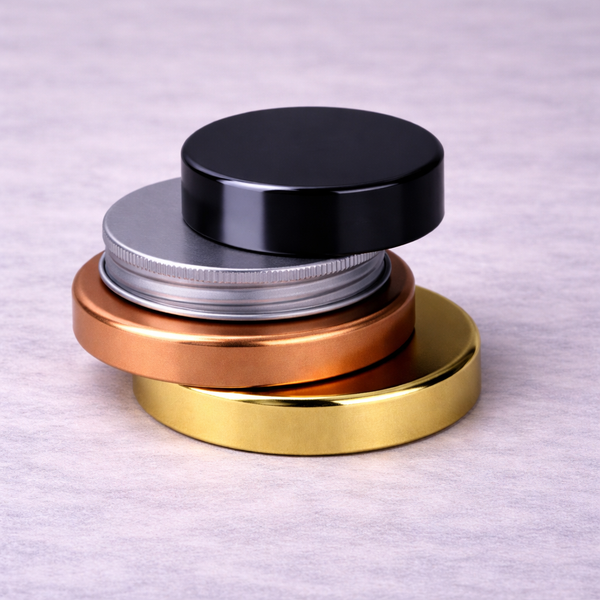
Lids come in different sizes, materials and finishes.
Most jam jars use twist-off metal lids, often shortened to T/O.
Instead of a continuous thread, a twist-off lid grips lugs on the jar's neck. It goes on and comes off with a short turn, which is exactly what you want for something opened every morning.
The number in the name, such as T/O 63 or T/O 70, refers to the neck size. And that's the important bit.
A lid made for one neck size won't fit another. "Nearly fits" isn't good enough with food, because a poor fit can mean a poor seal.
So don't guess. On our site, the Add Compatible Item section on each jar's product page shows the lids made to fit that jar. For a wider overview of lids and caps, see our Closures & Components Guide.

Featured product
A gold twist-off lid that gives preserves a warm, traditional finish. Check Add Compatible Item on your jar's page to confirm the fit.
View productDoes the lid colour matter?
Not for the seal. But it matters a lot for the look.
Gold feels warm and traditional. Black feels modern and sharp. Silver sits somewhere in between. Some producers use a different lid colour for each flavour or each range, which helps customers find their favourite quickly.
If you're heat-processing or hot-filling, check the details of the specific lid and make sure it suits your method.
How Do You Prepare Jam Jars for Filling?
Clean, sterile jars are a basic part of making preserves that keep.
Most makers wash jars and lids in hot soapy water, rinse them well and then sterilise them before filling. Common methods include the oven, boiling water and a hot dishwasher cycle. Our guide on how to sterilise glass covers the main methods and the mistakes to avoid.
A few simple habits help:
- Avoid big temperature shocks. Don't pour very hot jam into cold jars, or put hot jars on a cold, wet surface.
- Check every jar for chips or cracks on the rim before you fill it. A damaged rim won't seal properly.
- Leave consistent headspace, so every jar looks the same and seals the same.
- Wipe the rim clean before the lid goes on. Sticky jam on the rim is a common reason for a poor seal.
If you're selling your jam, you'll also need to follow the food hygiene and labelling rules that apply to your business. Your local authority is a good first contact if you're starting out.
What Should Small Producers Check Before Ordering Jam Jars?

Featured product
110ml Clear Glass Hexagonal Jar
A small jar for tasters, hampers, hotel breakfasts and Christmas gift sets.
View productAutumn is preserving season. It's also when Christmas hampers and gift orders start to build.
That's a good reason to sort your jars early.
Before you place a larger order, run through a short checklist:
- Order samples first. Fill them with your real recipe, label them and see how they look together.
- Pick one or two shapes. A small, consistent range is easier to label, store and reorder.
- Order lids at the same time. Running out of lids with a full pallet of jars is a frustrating way to lose a week.
- Think about gift sizes. Small jars sell well in hampers and mixed sets in the run-up to Christmas.
- Plan for growth. If you expect to scale, ask about larger quantities early. Our wholesale and bulk glass buying guide explains how it works.
Simple. But it saves a lot of last-minute stress.
The Bottom Line
A good jam jar is clear, sturdy and sized for how your customers buy.
Choose the shape that suits your brand, check the weight of your recipe in a real sample, and always pick the jar and the twist-off lid together.
Get those three things right, and your jam will look as good on the shelf as it tastes on toast.
FAQs
What size is a standard jam jar?
There isn't one official size. Full-size jars for the shop shelf and smaller jars for tasters and gifts are both common. Fill a sample with your recipe and weigh it to see how much it holds.
Can I reuse jam jars for selling?
Glass jars can be reused at home, but for products you sell, new jars and new lids are the safer choice. A used lid may not seal reliably, and you need to be confident every jar is clean and undamaged.
What lids do jam jars use?
Most use twist-off (T/O) metal lids that match the jar's neck size. Check the Add Compatible Item section on the jar's product page to see which lids fit.
Are hexagonal jars harder to label?
A little. Labels usually go on one or two flat faces rather than wrapping round. Test your label on a sample jar before you print in quantity.
Do you sell jam jars in bulk?
Yes. Our food jars and lids are available in larger quantities for growing producers. Contact us if you need help with volumes or a regular supply.
Dejar un comentario