

How Do You Choose the Right Chutney and Pickle Jars?
Key Takeaways
- Chutney and pickles need a jar with a wide neck, a lid that seals well and glass that shows off what's inside.
- Vinegar is acidic, so the lid matters as much as the jar. Choose lids made for food and check they suit acidic, vinegar-based products.
- Pick the size by how people buy: small jars for hampers and tasters, medium jars for the shop shelf, larger jars for pickles and catering.
- Lids have to match the jar's neck, so use the Add Compatible Item section on each jar's product page to find the ones that fit.
- Browse our food jars, or get in touch and we'll help you choose jars and lids for your chutneys and pickles.

A plain clear round jar keeps the focus on the chutney.
How Do You Choose the Right Chutney and Pickle Jars?
Chutney season is here.
Apples, pears, plums and green tomatoes are going into the pan. Onions are being peeled for pickling. And a lot of it is heading for Christmas hampers, farm shop shelves and market stalls.
So the jar matters.
Chutneys and pickles are a little different from jam. They're chunkier, they're full of vinegar and they're often left to mature for weeks before they're opened. That changes what you need from the glass and, even more, from the lid.
Choosing the right jar comes down to four things: the neck, the lid, the size and the shape. Get those right and the rest is easy.
Why Is Glass the Best Choice for Chutney and Pickles?
Because it doesn't react with what's inside.
Vinegar, salt and spices are hard on packaging. Glass is inert, so it won't take on flavours or smells, and it won't change the taste of your recipe however long the jar sits on the shelf.
Glass also does a lot of selling for you.
- It shows the product. Customers can see the chunks of fruit, the colour of the onions and the spices in the brine.
- It's widely recycled. Glass jars go in household recycling across the UK, and plenty of customers reuse them at home.
Clear glass is the usual choice. Chutneys are rich and colourful, and pickles look good through clear glass. There's rarely a reason to hide them.

Featured product
A straight-sided jar with a wide neck that's easy to fill with chunky chutney and easy to spoon out of.
View productWhy Does the Neck Size Matter So Much?
Chutney is thick. Pickles are big.
That's the whole reason.
A narrow neck makes filling slow and messy. Chunks catch on the rim, and anything on the rim can stop the lid sealing properly. A wide neck lets you ladle or funnel chutney in quickly and cleanly.
It matters for pickles too. Whole shallots, gherkins and chunks of cauliflower need room to go in. And your customer needs room to get a fork in to fish them out.
A good rule: if your product has pieces in it, choose a jar with a wide mouth and straight or gently curved sides.
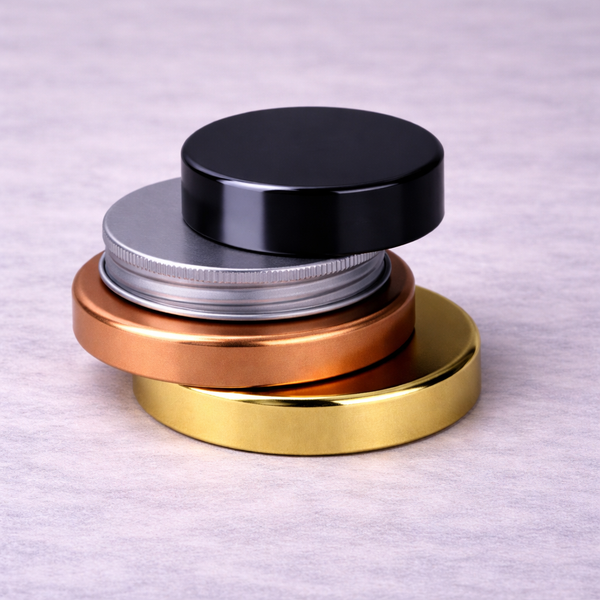
Lid finishes range from classic gold to modern black.
Which Lid Should You Use for Vinegar-Based Products?
This is the most important decision in this guide.
Vinegar is acidic. Over time, acid can attack bare metal. That can spoil the lid, and it can spoil the product too.
So the lid needs to be made for food, and it needs to suit acidic, vinegar-based products. Most food jar lids have a protective coating and a sealing compound on the inside for exactly this reason. Before you order in volume, check the lid's details, and if you're not sure, ask.
Most chutney and pickle jars use twist-off metal lids, often shortened to T/O. They grip lugs on the jar's neck and go on with a short turn. The number in the name, such as T/O 63 or T/O 70, is the neck size.
And the lid has to match the neck.
A lid that nearly fits won't seal. With a product that's meant to sit for weeks or months, that's a real problem.
So don't guess. Open the jar's product page on our site and look for the Add Compatible Item section. It shows the lids made to fit that jar, so you can add them to the same order. Our Closures & Components Guide explains the different closure types.

Featured product
A black twist-off lid that gives chutneys and pickles a modern, deli-style finish. Check Add Compatible Item on your jar's page to confirm the fit.
View productDoes the lid colour matter?
Not for the seal. But it changes the look a lot.
Gold feels traditional and warm, which suits a classic farmhouse chutney. Black looks modern and sharp, and it's popular with deli-style ranges. Silver is clean and simple.
You can browse the full range in our food closures collection.
What Size Jar Do You Need for Chutney?
Start with how your customers buy and use it.
Chutney is a condiment. People use a spoonful at a time with cheese, cold meats or a curry. So a chutney jar doesn't need to be huge. Pickles are different. A jar of pickled onions or gherkins gets eaten faster, so a bigger jar makes sense.
As a rough guide:
- Small (around 40ml to 110ml). Tasters, hamper fillers, cheese board gifts, hotel and café portions.
- Medium (around 190ml to 300ml). The everyday retail size for chutney, relish and piccalilli.
- Large (around 375ml and up). Pickled onions, gherkins, mixed pickles and bestsellers.
Then weigh it.
Jars are sold by capacity in millilitres. Chutney is usually sold by weight. Fill a sample jar with your real recipe, leave the headspace you'll use in production, and weigh it before you print labels.
Our glass bottle and jar size guide explains ml, cl and oz if your recipe uses different units.

Featured product
Flat faces for a front and back label, and a modern look for deli-style chutneys and relishes.
View productRound, Square or Hexagonal: Which Shape Works Best?
All three work. The difference is the look you want and how you'll label and pack.
Round jars are the classic. They're easy to fill, easy to label with a wrap-around label and easy to scrape clean. If you want a traditional, home-made look, round is hard to beat.
Square jars feel more modern. Flat faces give you a clean front label and a back panel for ingredients and allergens. They also sit neatly side by side in a box or on a shelf.
Hexagonal jars catch the light and look special. They're a favourite for gifts and hampers. Labels usually sit on one or two flat faces, so plan your label size with a sample in hand. Our guide to hexagonal jars goes into more detail.
How Do You Fill and Seal Chutney Jars Properly?
Clean jars, a clean rim and a good lid. That's most of it.
Most makers wash jars and lids in hot soapy water, rinse them well and sterilise them before filling. Our guide on how to sterilise glass covers the main methods.
A few habits make a big difference:
- Avoid temperature shocks. Hot chutney usually goes into warm jars. Pouring very hot chutney into cold glass, or standing hot jars on a cold, wet surface, risks cracking.
- Get the air out. Chunky chutney traps air pockets. Tap the jar gently or run a clean knife down the inside as you fill.
- Wipe the rim. A smear of chutney on the rim is one of the most common reasons a lid doesn't seal.
- Keep pickles covered. Make sure the vinegar covers the vegetables, with a little headspace below the lid.
Then let the chutney mature. Many recipes suggest a few weeks before opening, which is why October is the time to make it for Christmas.
If you're selling your chutneys and pickles, you'll also need to follow the food hygiene and labelling rules for your business. Your local authority is a good first contact if you're starting out.

Featured product
110ml Clear Glass Hexagonal Jar
A small, giftable jar for chutney tasters, cheese board sets and Christmas hampers.
View productHow Do You Get Chutney Jars Ready for Christmas Hampers?
Think small, and think in sets.
Hamper buyers want variety. Three small jars of different chutneys will often sell better than one big jar, and they make a ready-made gift for cheese lovers.
A few tips for the season:
- Order early. Chutney needs time to mature, and jars need time to arrive, fill and label. Leave yourself room.
- Order lids with the jars. Running out of lids with a full order of jars is a frustrating way to lose a week.
- Match the set. Same shape, same lid colour, same label style. It looks like a brand, not a jumble.
Planning bigger volumes? Our wholesale and bulk glass buying guide explains how ordering in quantity works.

375ml Clear Glass Round Jar: a full-size jar for pickles and bestselling chutneys.
The Bottom Line
Chutney and pickles are made to last. The jar should be too.
Choose a wide neck for chunky recipes. Choose a food lid that suits vinegar. Pick the size from how your customers buy, test it with your real recipe, and keep your range consistent.
Lids must match the jar, so use the Add Compatible Item section on each jar's product page to see the closures that fit. You can also browse our glass jars and food closures, read our Closures & Components Guide, or contact us and tell us what you're making.
FAQs
What size jar is best for chutney?
For retail, medium jars of around 190ml to 300ml are the most common. Small jars of around 100ml suit tasters and hampers. Fill a sample with your recipe and weigh it before you print labels.
What lids should I use for pickles and chutney?
Use metal twist-off lids made for food and suitable for acidic, vinegar-based products. The lid must match the jar's neck, so check the Add Compatible Item section on the jar's product page.
Can I use jam jars for chutney?
Yes. Many food jars work for jam, chutney and relish alike. For chunky chutneys and whole pickles, choose a jar with a wide neck so it's easy to fill and easy to spoon out.
Do your jars come with lids?
Jars and lids are listed separately so you can choose the finish you want. Use the Add Compatible Item section on the jar's product page to add lids that fit.
Can I buy chutney jars in bulk?
Yes. You can order a small quantity to test, then buy in volume once you're happy. Contact us if you need help with larger quantities or a regular supply.
Dejar un comentario